
What Is Companion Care for Seniors?
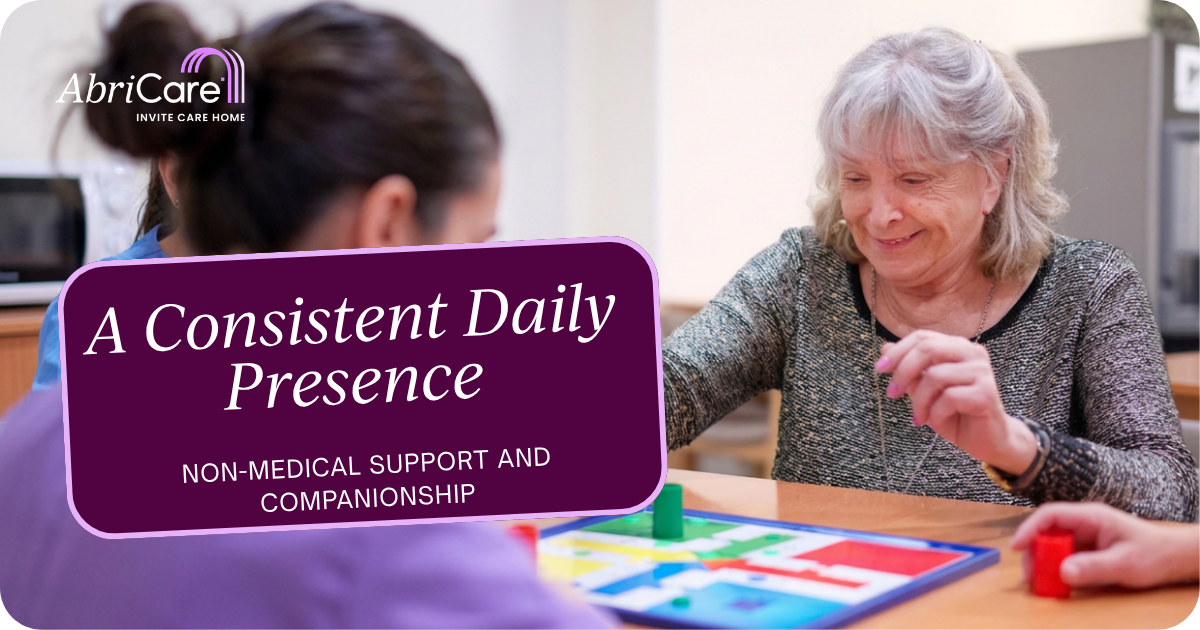
Companion care for seniors is non-medical, in-home support designed for older adults who are still physically independent but shouldn't spend long stretches alone.
A companion caregiver provides conversation, light help around the house, transportation, and a consistent presence, without the hands-on physical care that comes with personal care support.
It's usually the first level of home care families look into, often before there's a medical reason to do so.
What a Companion Visit Actually Looks Like
A typical companion visit includes:
- Conversation, games, hobbies, and general companionship
- Light housekeeping and meal preparation
- Medication reminders (not administration)
- A consistent, familiar presence in the home
At AbriCare, a companion caregiver is matched to a parent based on personality and routine, not just availability.
Before the first visit, the family walks the caregiver through the home, daily schedule, and anything that matters to how the person likes their day to go.
The goal is a fit that holds up over months, not just a body in the house for a few hours.
Signs a Parent Could Benefit From It
Companion care usually comes up before a crisis, not after one. Families typically start looking into it when:
- A parent lives alone and has become noticeably more isolated, often after a spouse passed, or friends moved away
- They're safe managing personal care but have stopped driving, which limits how often they get out
- A family member notices a parent has withdrawn or stopped doing things they used to enjoy
- The family wants regular, reliable eyes on a parent without the cost or intensity of full personal care
This matters beyond comfort. Social isolation in older adults is linked to higher risks for depression, heart disease, and cognitive decline, not just loneliness in the abstract sense.

Who Companion Care Isn't Enough For
Companion caregivers don't provide hands-on help with bathing, dressing, toileting, or mobility, and they're not equipped for medical needs.
Why North Kansas City Families Choose AbriCare
AbriCare provides companion care on an hourly model with no minimum weekly requirement, so families can start with two or three visits a week and adjust from there.
Because companionship and personal care run through the same caregiver relationship, a parent's care can expand as needs change without switching providers or starting over with someone new.
Ready to See What Companion Care Could Look Like?
A free home assessment from AbriCare takes about 45 minutes.
The care team reviews what your parent needs, matches a companion caregiver based on fit, and builds a schedule around your family's routine. No pressure, no obligation.
Request a Free Assessment

FAQ: Companion Care for Seniors
What is companion care for seniors?
Companion care is non-medical, in-home support focused on social engagement, light household tasks, and a consistent presence for seniors who are physically independent but shouldn't be alone for long stretches. It doesn't include hands-on personal care.
Does companion care include help with bathing or dressing?
No. That falls under personal care, a separate service. Companion caregivers focus on companionship, light tasks, and supervision, not hands-on physical assistance.
How is companion care different from a home health aide?
A home health aide provides clinical support ordered by a physician. Companion care is entirely non-medical, built around social engagement and light daily support instead.
How do I know if my parent needs companion care or something more?
If they're safe managing personal care but isolated or needing light help, companion care usually fits. If they need hands-on help with bathing, dressing, or mobility, that's a personal care need.
Can companion care help if my parent has early memory loss?
Yes, in many cases. It can provide helpful routine and supervision in early stages of memory decline, though a care coordinator should confirm it's the right level of support for your specific situation.
Related posts

Cómo ayudar a un padre o madre con osteoporosis en casa: consejos de nuestro equipo

Recursos comunitarios para personas mayores y familias en Rolla, MO

Recursos comunitarios para personas mayores y familias en North Kansas City, MO
Nuestra puerta está siempre abierta.
Su proceso de cuidado comienza aquí.